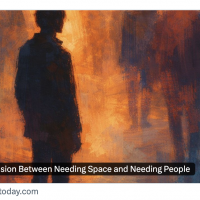
Clinical Answer: The tension between needing space vs. needing people reflects autonomic nervous system capacity rather than a permanent change in personality or identity. When chronic allostatic load depletes prefrontal executive energy, social connection—which requires active emotional attunement—is experienced as draining rather than regulating. Understanding that acute depletion is temporary prevents patients from defensively reorganizing their lives around social isolation, allowing for deliberate nervous system recovery.
Clinical behavioral science, neurobiology of allostasis, and physician editorial commentary in Psychology Today.
Column: Beyond the White Coat • By Benjamin Caplan, MD

Many people assume they’ve changed because social interaction suddenly feels more exhausting than it used to. They conclude they are becoming introverted, less compassionate, or that something fundamental about their personality has broken. In my medical practice evaluating thousands of patients across life transitions, I frequently remind them: More often, what’s changed is capacity, not identity.
“Time alone can feel necessary when emotional and neurological bandwidth is low. Connection can still be regulating, even when it costs more upfront energy. When we confuse acute depletion with enduring preference, we quietly reorganize our lives around a temporary state.”
— Benjamin Caplan, MD
1. The Neurobiology of Social Exhaustion: Allostatic Load and Nervous System Drain
Human beings are neurobiologically wired for social attachment. The polyvagal nervous system utilizes face-to-face social engagement to downregulate fear and tone down cardiac output via the ventral vagal complex. However, social interaction is metabolically expensive. It requires continuous micro-attunement: processing facial micro-expressions, modulating vocal prosody, managing emotional empathy, and filtering background sensory stimuli.
When a person experiences chronic stress—whether from demanding careers, medical illness, caregiving, or sleep disruption—the body accumulates what neuroscientists term allostatic load. The prefrontal cortex becomes fatigued, and the autonomic nervous system shifts from comfortable social connection into survival states: either sympathetic hyper-arousal (irritability and agitation) or dorsal vagal shutdown (numbness, lethargy, and the overwhelming urge to hide).
| Psychological State | Internal Motivation | Autonomic Nervous System State | Long-Term Clinical Outcome |
|---|---|---|---|
| Restorative Solitude | Intentional downtime to recharge nervous system capacity | Parasympathetic activation; reduced cortisol; deep cognitive rest | Restores social battery; enhances emotional resilience and presence |
| Defensive Isolation | Avoidance driven by fear of exhaustion or social overwhelm | Dorsal vagal freeze or chronic low-grade sympathetic anxiety | Narrows patient life; worsens depressive symptoms and loneliness |
2. The Endocannabinoid System, Oxytocin, and Stress Regulation
How do these behavioral observations connect to molecular physiology? The endocannabinoid system (ECS) operates as the primary homeostatic regulator of the hypothalamic-pituitary-adrenal (HPA) axis. When endogenous cannabinoid tone (anandamide and 2-AG) is depleted by prolonged emotional stress, the brain’s ability to terminate stress responses becomes blunted.
Cannabinoid CB1 receptors in the basolateral amygdala and prefrontal cortex directly interface with oxytocinergic reward circuits. When stress exhaustion sets in, oxytocin release during social encounters is dampened, transforming what should be a comforting conversation into an intolerable energy expenditure. In clinical medicine, recognizing this biological depletion enables patients to implement strategic micro-rests, sensory detoxes, and lifestyle interventions rather than blaming themselves for a perceived character flaw.
Read the Complete Essay on Psychology Today
Explore the full clinical reflection on chronic fatigue, social battery depletion, and nervous system recovery in Dr. Caplan’s national column.
Frequently Asked Questions: Emotional Capacity & Social Burnout
What does it mean that social burnout is a change in “capacity, not identity”?
When people experience prolonged mental or physical stress, their neurological energy reserve shrinks. While they may conclude they have permanently become “less social” or “introverted,” the reality is that their physiological capacity to process social stimulation is temporarily drained. Once nervous system rest is restored, social engagement feels natural and rewarding again.
How does chronic stress make human connection feel exhausting?
Social interaction requires prefrontal cortex energy to regulate emotions, track speech, and practice empathy. Under chronic stress, the hypothalamic-pituitary-adrenal (HPA) axis remains chronically active, shifting neurological resources away from social engagement and into survival mode, making conversations feel like physical work.
What is the clinical difference between healthy solitude and defensive isolation?
Healthy solitude is intentional and restorative, chosen to recharge creativity, engage in quiet reflection, and calm the nervous system. Defensive isolation is driven by avoidance and anxiety, cutting individuals off from meaningful relationships and gradually increasing long-term feelings of loneliness and depression.
How can someone rebuild their social battery without crashing?
Rebuilding capacity requires starting small: choosing one-on-one interactions over large groups, engaging with trusted friends where emotional performance is unnecessary, setting gentle time boundaries on social events, and scheduling protected downtime both before and after social commitments.
What is Dr. Caplan’s Psychology Today column “Beyond the White Coat” about?
Beyond the White Coat explores the intersections of medicine, psychology, lifestyle physiology, and human behavior. Dr. Caplan draws upon decades of direct patient care to examine how healthcare systems, stress biology, and modern lifestyles influence emotional and physical health.
Where can I read more of Dr. Caplan’s writings on health and medicine?
In addition to his column in Psychology Today, Dr. Caplan publishes educational articles on CEDclinic.com, writes his weekly Substack newsletter Doctor Approved, and authored The Doctor-Approved Cannabis Handbook.

Written & Medically Reviewed by Benjamin Caplan, MD
ABFM Board-Certified Family Physician | MA Medical License #240562 | NPI: 1962722637
Contributing Columnist, Psychology Today | Founder & CMO of CED Clinic | Author of The Doctor-Approved Cannabis Handbook
Dr. Benjamin Caplan has evaluated over 350,000 patients across his career, bridging clinical medicine, behavioral health, and stress neurobiology. Explore his column on Psychology Today or book a clinical consultation at CED Clinic.
Peer-Reviewed Behavioral Medicine & Neurobiology References
- McEwen, B. S. (2007). Physiology and Neurobiology of Stress and Adaptation: Central Role of the Brain. Physiological Reviews, 87(3), 873–904. DOI: 10.1152/physrev.00041.2006. PMID: 17615391.
- Porges, S. W. (2009). The Polyvagal Theory: New Insights into Adaptive Reactions of the Autonomic Nervous System. Cleveland Clinic Journal of Medicine, 76(Suppl 2), S86–S90. DOI: 10.3949/ccjm.76.s2.17. PMID: 19376991.
- Eisenberger, N. I. (2012). The Pain of Social Disconnection: Examining the Shared Neural Underpinnings of Physical and Social Pain. Nature Reviews Neuroscience, 13(6), 421–434. DOI: 10.1038/nrn3231. PMID: 22551663.