Article

More

Cannabis for Pediatric Autism: Clinical Evidence, Mechanisms, and Safety Guidelines

  • May 1, 2026

Clinical trials and real-world registries demonstrate that cannabinoid therapies may help modulate severe behavioral dysregulation, anxiety, and sleep disruption in pediatric autism spectrum disorder. Because children possess distinct neurodevelopmental sensitivities and hepatic metabolic profiles, cannabinoid treatment requires specialized physician supervision, precise whole-plant formulation selection, and gradual micro-titration. Board-certified family physician Dr. Benjamin Caplan provides a comprehensive breakdown of clinical mechanisms, peer-reviewed evidence, and strict safety guidelines for families and clinicians.


More

Smoking Mullein Leaf for a Lung Cleanse? A Physician’s Reality Check from Men’s Health

  • February 13, 2026

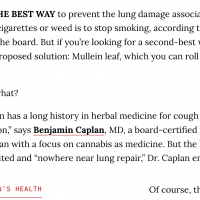
Driven by viral social media trends claiming that smoking dried mullein leaf can ‘detox tar’ and cleanse the respiratory tract, millions of consumers are experimenting with herbal smoking blends. In an expert feature published by Men’s Health, board-certified family physician Dr. Benjamin Caplan explains why inhaling combusted plant matter is a misleading shortcut that irritates delicate bronchial tissue rather than healing it. This clinical analysis explores the pharmacology of Verbascum thapsus, compares oral demulcent teas against pulmonary combustion risks, and outlines medically sound pathways to restore lung health.

More

The Quiet Tension Between Needing Space and Needing People: Clinical Reflections in Psychology Today

  • February 5, 2026

When everyday social interactions begin to feel exhausting, many individuals conclude that their personality has permanently changed or that they are becoming anti-social. In his Psychology Today column ‘Beyond the White Coat,’ board-certified family physician Dr. Benjamin Caplan argues that this tension reflects an acute depletion of nervous system capacity rather than an altered personal identity. Understanding the neurobiology of allostatic load, HPA axis stress fatigue, and restorative solitude allows individuals to heal burnout without withdrawing into permanent isolation.

More

4 Ways the Cannabis Industry Has Evolved: Clinical Perspectives with Dr. Benjamin Caplan

  • September 23, 2025

The medical cannabis sector is undergoing a profound paradigm shift away from superficial wellness marketing and toward rigorous, evidence-based healthcare integration. Patients and healthcare providers increasingly demand precise cannabinoid dosing, comprehensive laboratory testing, and individualized clinical oversight to address complex health challenges. Board-certified physician and healthtech founder Dr. Benjamin Caplan reflects on his interview with CannabisInterviews.com, outlining four foundational ways the modern cannabis industry is maturing into legitimate clinical medicine.

More

Cannabis and Heart Health: Clinical Evidence, Cardiovascular Mechanisms, and the JAMA Study Critique

  • June 6, 2025

Following widespread media coverage of a UCSF study published in JAMA Cardiology linking cannabis to potential cardiovascular risks, board-certified family physician Dr. Benjamin Caplan provides an evidence-based clinical appraisal of cannabinoid hemodynamics. While acute delta-9-THC inhalation can trigger transient tachycardia, peripheral vasodilation, and sympathetic nervous system activation, broad observational registries frequently conflate combustion-related toxins with pure cannabinoid pharmacology. This comprehensive clinical guide examines the physiological mechanisms of CB1 and CB2 receptors in vascular tissue, identifies high-risk cardiac contraindications, and details safe monitoring protocols for patients and physicians.

More

Cannabis 101: A Smarter Look at Clinical Endocannabinology, Dosing, and Physiology

  • May 27, 2025

Delivered as an educational lecture to the Hawaii State Department of Health’s Office of Medical Cannabis Control and Regulation, this comprehensive guide replaces commercial marketing myths with rigorous clinical endocannabinology. Dr. Benjamin Caplan breaks down why universal starting dosages like ‘5mg’ fail diverse patient populations, how first-pass hepatic metabolism transforms delta-9-THC into the significantly more potent 11-hydroxy-THC, and how individual genetics, hormones, and cytochrome P450 enzymes dictate therapeutic outcomes. Designed for healthcare providers, regulators, and patients alike, this reference establishes an evidence-based foundation for understanding how cannabinoids interact with the human body.

More

Cannabis and Pregnancy: Clinical Evidence, Endocannabinoid Physiology, and Risk-Benefit Decision-Making

  • February 15, 2025

While major medical organizations caution against cannabis use during pregnancy due to theoretical neurodevelopmental risks and potential associative links with low birth weight, millions of pregnant individuals experience debilitating nausea, hyperemesis gravidarum, and severe pain unresponsive to conventional therapies. Because ethical constraints prevent randomized controlled trials, available clinical literature relies almost entirely on retrospective observational datasets heavily confounded by polysubstance exposure, socioeconomic stressors, and unverified self-reporting. Board-certified family physician Dr. Benjamin Caplan provides an evidence-grounded review of placental endocannabinoid physiology, methodological study limitations, and compassionate clinical decision-making for patients and healthcare providers.

More

Medical Cannabis for Seniors: Clinical Evidence, Polypharmacy Reduction, and Policy Reform

  • February 13, 2025

With over thirty percent of American adults over sixty-five taking five or more daily pharmaceuticals, medical cannabis offers a scientifically validated pathway to reduce high-risk polypharmacy and alleviate chronic pain. Clinical research demonstrates significant reductions in dangerous opioid and benzodiazepine prescriptions among older adults, mitigating fatal falls and adverse drug interactions. Board-certified family physician Dr. Benjamin Caplan outlines the clinical evidence, geriatric pharmacology safeguards, and urgent Medicare policy reforms necessary to expand safe access for seniors.